



What is DQ200 mechatronic failure?
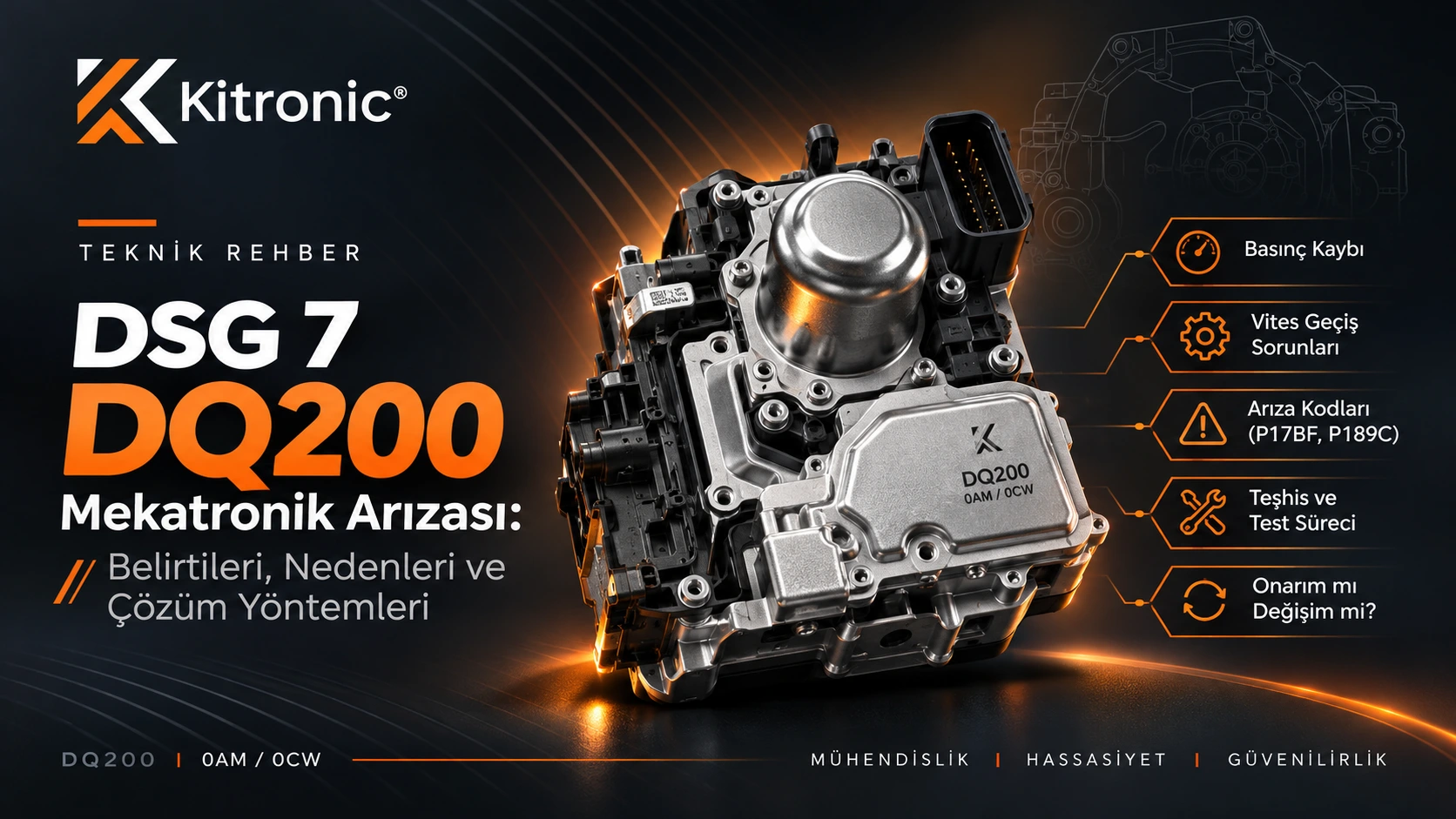
A DQ200 mechatronic fault affects the electronic or electrohydraulic control of the seven-speed dry dual-clutch transmission. Gear selection and clutch actuation may be impaired. Harsh shifts, delayed engagement and a flashing gear indicator do not identify a failed component on their own.
Typical symptoms
Delayed Drive or Reverse engagement, loss of certain gears, frequent pump cycling, fluid leakage or interruption of drive may occur. If drive is lost or a serious transmission warning appears, stop safely and arrange a professional inspection.
Hydraulic and electronic causes
The pressure accumulator, hydraulic housing, pump, seals and valves influence hydraulic pressure control. Power supply, wiring, sensor or TCU faults may cause similar symptoms. The clutch and mechanical gearbox must be assessed separately.
Interpreting diagnostic trouble codes
P17BF may indicate hydraulic pump protection; P189C points towards insufficient pressure build-up. P0841 relates to pressure sensor signal plausibility. Codes guide the diagnosis but do not establish which component must be replaced.
Pre-repair and post-repair verification
Compare stored faults, live data, electrical supply and hydraulic pressure behaviour. Use off-vehicle testing where appropriate. Kitronic YMZ 141 supports pump, valve, piston and accumulator checks and recording of test results. Complete the applicable manufacturer basic settings after repair.
Frequently Asked Questions
Can adaptation fix the fault?
No. Basic settings cannot repair physical damage or hydraulic leakage.
Is complete mechatronic replacement necessary?
Not always. Component-level repair depends on the extent of damage and test results.